
Summary



Product marketing, change management, and internal communications teams often work in silos with different budgets, leaders, and Slack channels. But look closer, and the boundaries blur. All three functions have the same goal: helping people understand something new and getting them to act on it.
When these disciplines operate separately, the symptoms are often clear. A product story lands in a leadership deck, but confuses the teams tasked with delivering it. Customers hear one message, while employees repeat a different, softer version in the hallway. A launch happens, but behavior barely shifts.
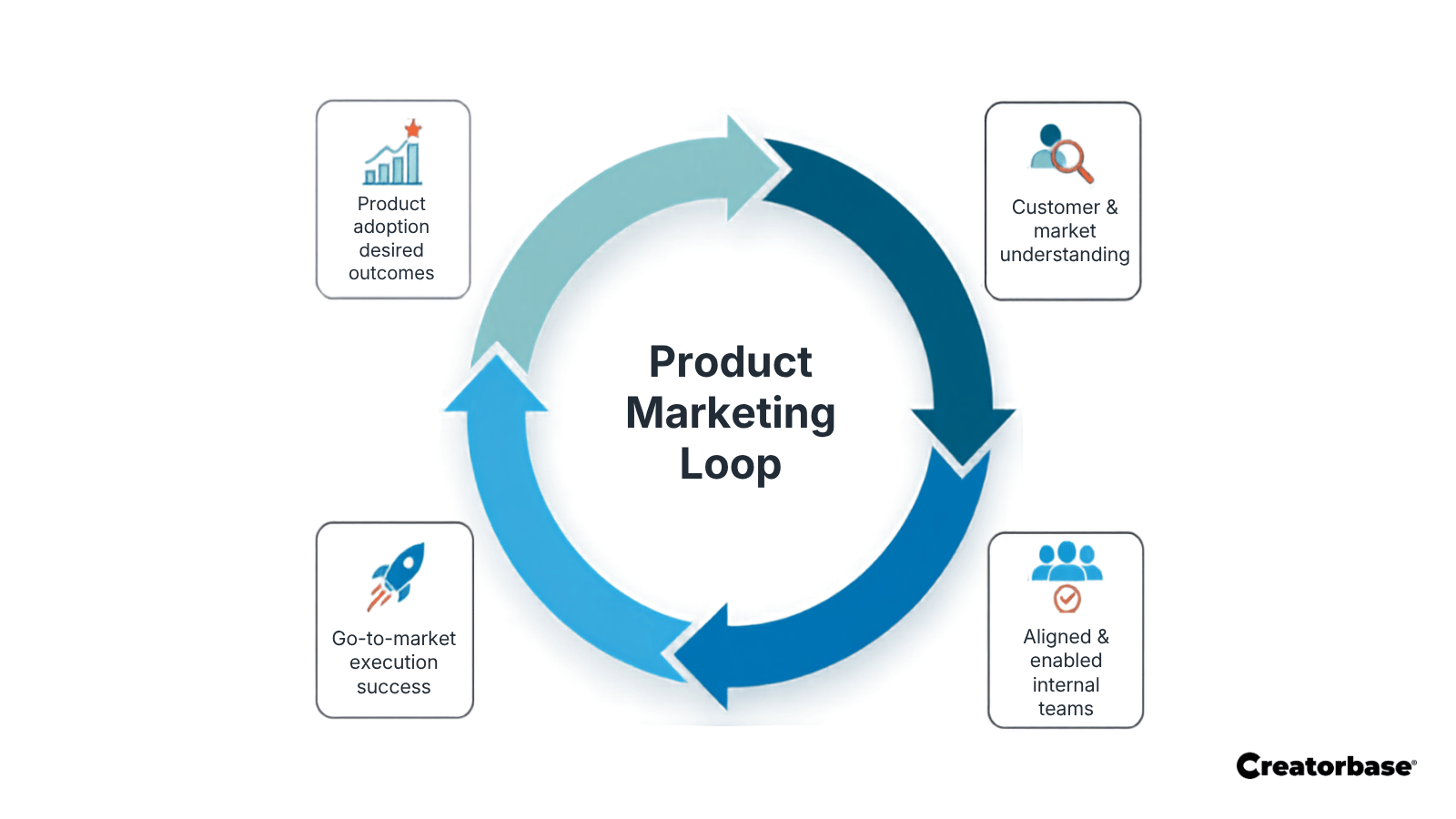
Consider the following framework and key takeaways:
Messaging is a change management mechanism, not a campaign finale
A strong product narrative does more than describe features. It acknowledges that someone’s daily routine is about to be disrupted. That means writing toward the questions people actually carry into the room: What am I really being asked to do differently? Does this make my job easier or harder? What do I give up if I say yes?
Change management and internal comms sharpen product marketing by forcing it to "show its work." Messaging built with a change lens names the tradeoffs and anticipates resistance instead of being blindsided by it. The payoff isn't just sharper copy; it’s language people trust enough to act on.
A launch is a starting line, not a finish line
Too many go-to-market plans treat launch day as the summit. The announcement goes out, the campaign runs, and the team moves on. In reality, the hardest work begins after people first hear the news.
A change-informed team asks different questions post-launch: Who actually changed their behavior? Where did we make the new way easier than the old way? Where is quiet resistance surfacing? Done well, a launch stops being a single, isolated moment and becomes a sustained loop of activity by understanding the market, enabling internal teams, and driving adoption outcomes.
What employees say to each other becomes what customers experience
There is a direct line between internal alignment and customer perception. When leadership tells one story, managers soften it, and frontline teams improvise their own version, customers feel the inconsistency immediately.
Bringing these three functions together fixes this at the source. The story becomes simple enough for anyone to repeat in their own words, internal feedback shapes the external narrative, and hallway conversations reinforce customer calls instead of contradicting them. In long enterprise technology cycles, that consistency is a genuine differentiator. Proof that what a company says, what its people believe, and what customers experience are the same thing.
The intersection is the job now
Owning the pitch deck and the launch checklist is no longer the definition of senior product marketing. The real work sits at the intersection: where product story meets human behavior, and where strategy must survive contact with how people actually work in the AI era. That is the ground this next generation of product marketers needs to own: Part storyteller, part change leader, and part communicator.
Help us help you and others
How are you co-creating the future in your business domain? Choose at least one action below to engage:
- Subscribe to the Creatorbase Brief weekly newsletter.
- Apply to join our community and media organization as a Founding 500 member.
- Participate on a Co-cre8 team to start your co-creation journey today.


